Operation Soil Shake
HQ says: our soil looks like plain brown dirt, but HQ thinks it's hiding layers. Can you find them?
This takes 5 minutes tonight to find two clear jars, then 30 to 45 minutes outside tomorrow or at the weekend, plus a 2-minute peek the next morning. Rangers (7 to 10) add about 10 minutes. You choose where they dig, you pour the water, and you stay where you can see your kids. Then switch to Agent view and hand your phone to your child, who is HQ's agent for this mission.

Warm-up: Stone, Sand, Dust!
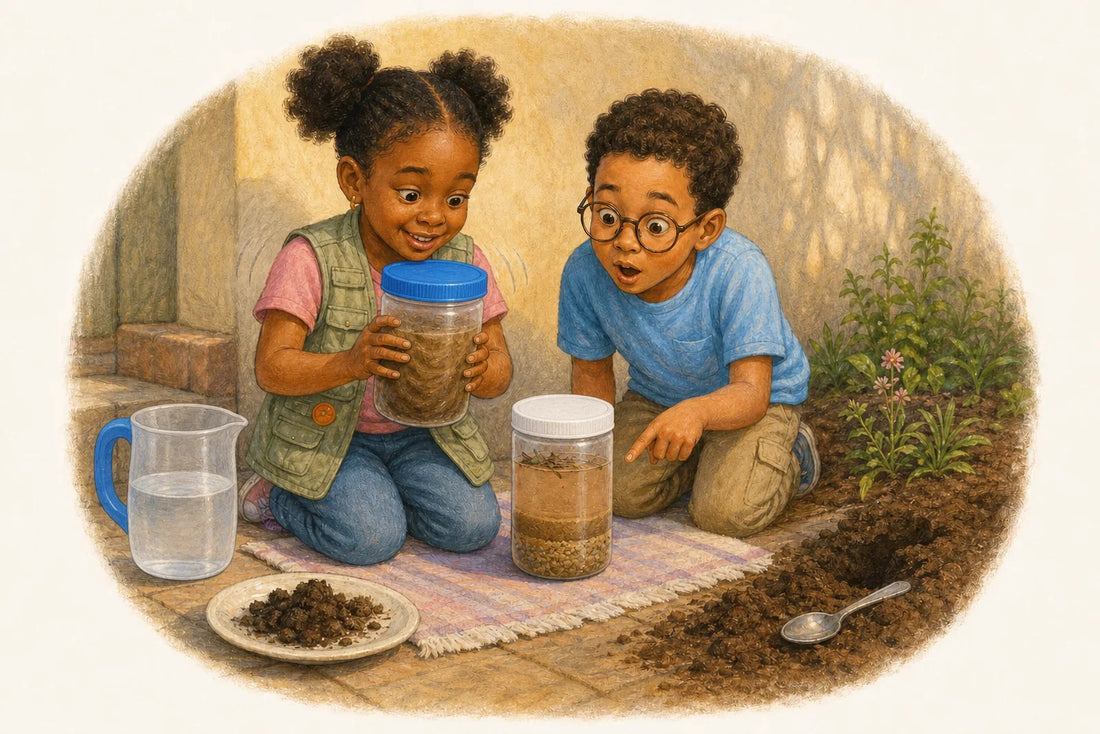
Stand up tall. When you hear “Stone”, squat down fast. “Sand” means sink down a bit slower. “Dust” means float down as slowly as you can. Dig up some soil with a spoon from 2 spots your grown-up picks, and tip it onto the plate. If you find something sharp, stop and show your grown-up.
 Guess which bits will reach the bottom first, the big bits or the tiny bits. Then shake your jar hard and count to 20, three times.
 Put your jar down, keep it very still, and watch which bits sink to the bottom first.
In CAPS Life Skills (Beginning Knowledge), Grade 2 learners explore soil, its colours and its textures. In Grade 5 Natural Sciences and Technology (Surface of the Earth), they compare soil types: sandy soil, clay soil and loam. This is that lesson, outside.
Tonight
Find 2 clear plastic jars or bottles with lids. Wash them out and peel off the labels, so you can see right through. Put them by the door with a spoon, a jug and an old plate. Decide where they're allowed to dig, and where the jars can stand overnight: a flat spot indoors, at the back of a counter, out of reach of little ones.Warm-up: Stone, Sand, Dust!
A 1-minute game on the grass or a rug, with space between the kids (in a flat, do it inside on a rug, not on the balcony). Everyone starts standing tall. Call “Stone!” and they squat down fast. Call “Sand!” and they sink down a bit more slowly. Call “Dust!” and they float down as slowly as they can while you count to 10, swaying like dust in the air. It plants the idea they'll test: big, heavy bits sink fast and tiny bits sink slowly.Running the soil shake
- Pick two spots where it's fine to dig a small hole, like a garden bed and the edge of the lawn, or the soil under a tree and a sandpit that's kept covered. Choose places away from sprinkler pipes, cables and the pool, and never where pets go to the toilet. Before they dig, ask: which spot do you think has the most sand?
- They dig in open soil with a spoon, no deeper than the spoon is long, and tip the soil onto an old plate or a sheet of newspaper. Check it together before it goes in a jar: you take out anything sharp, like glass or a nail, wrap it in newspaper and put it in the bin. Take out big stones and sticks too. Goggas and worms go back where they came from. Break up hard lumps with the back of the spoon.
- They spoon the soil into each jar until it's about a third full (with bottles, roll a sheet of paper into a funnel). Then you pour in water until the jar is about three quarters full and screw the lid on tight. Stick a bit of tape down the side of each jar and write where its soil came from.
- Let the jars stand for 5 minutes so the soil soaks up the water. Meanwhile, ask for a guess: when they shake it and put it down, will the big bits or the tiny bits reach the bottom first?
- They shake each jar hard while counting to 20, with both hands round the jar, then rest and do it twice more. Then put both jars on a flat spot in the shade and leave them completely still. Shake over the towel, in case a lid leaks.
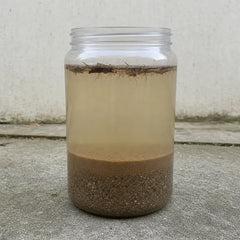
- Watch the first minute together. Little stones and sand drop straight away and make the bottom layer. Snap a photo after 1 minute. Some bits float on top: ask what they think those are.
- While they wait, try the feel test: wet a pinch of the leftover soil with a drop of water and rub it between finger and thumb. Gritty is sand. Smooth and silky, like flour, is silt. Sticky is clay.
- Snap the jars again after 10 minutes. A smoother layer is starting on top of the sand, but the water is still cloudy. Your child draws a koki line on the tape at the top of the layers, so tomorrow they can see how much more has settled.
- Then you carry the jars slowly, keeping them level, to a flat spot indoors at the back of a counter, out of reach of little ones, and leave them till morning.
- Tomorrow morning, take a last photo. There's a thin, smooth layer on top and the water is usually clearer. Very clay soil can stay cloudy for a day or two, because its bits are the tiniest of all. Put the three photos side by side: which jar had the most sand, and was the guess right?
- Two kids? Each one digs from their own spot and shakes their own jar, so you can compare whose soil makes more layers.
- When you're done, pour the muddy water and soil back where you dug it or onto a garden bed, never down the sink or the toilet, because sand blocks drains.
- Rangers (7 to 10): the squeeze test, the way farmers check soil by feel. Take about a teaspoon of each soil, pick out any little stones, and add drops of water until it feels like putty. Roll it into a ball, then push it out between thumb and finger into a flat ribbon until it breaks. Guess first: which soil will make the longer ribbon? Measure each ribbon with a ruler. Sandy soil feels gritty, falls apart and hardly makes a ribbon. A ribbon longer than about 5 cm means lots of clay. Tomorrow morning, check the jars: does the soil with the longer ribbon have a thicker smooth layer on top of its sand? For extra detail, they mark the top of each layer on the tape with a koki and measure each layer with the ruler.

Your phone is the field camera today
- Hand them your phone, because they take the photo, not you.
- Put the jars in front of a plain wall or a sheet of white paper, so the layers show up.
- Show them how to get down low, level with the jars.
- Tell them to tap once, then hold still while they count to two.
 With the Outside Quest kit, they print the photo on the spot, colour it in with their kokis and stick it in their Quest Book.
The answers, so you can explain
The biggest, heaviest bits sink first. Little stones and sand drop in a few seconds and make the gritty bottom layer. Silt, which feels smooth like flour, settles on top of the sand over the next hour or two. Clay bits are so tiny that the water holds them up for hours, which is why the water stays cloudy. By tomorrow morning there's usually a thin, smooth layer on top and the water is clearer. Very clay soil can stay cloudy for a day or two, because its bits are the tiniest of all.
Why? The water pushes back on everything that sinks through it. A big grain is heavy enough to push through easily, so it drops fast. A tiny grain has a lot of surface for how little it weighs, so the water's push almost holds it up, a bit like dust floating in the air. And the soil hasn't disappeared into the water like sugar in tea: it's all still there, just waiting to settle.
The bits floating on top are pieces of old leaves, roots and twigs. They're light and spongy, with air inside, so they float. Over time, bits like these rot into the dark, crumbly part of garden soil that plants love.
Different spots, different soil. Sandpit sand is nearly all one gritty layer and clears quickly. Garden-bed soil usually makes more layers and has more floating bits. Gardeners like loam, a mix of sand, silt and clay: sand lets water drain away, and clay holds on to water. Did you know? Rivers sort soil the same way. Where a river slows down as it flows into a dam, it drops its sand first, and the finest mud settles in the deep, still water. Over millions of years, layers like these can harden into striped rock called sedimentary rock.
Rangers: the squeeze test is how farmers and soil scientists check soil by feel. Sand is gritty and won't hold a ribbon, and lots of clay makes a sticky ribbon longer than about 5 cm. The soil with the longer ribbon usually shows the thicker smooth layer on top of its sand by morning. Afterwards, ask them which bits sank first, why the water stayed cloudy for so long, and which spot had the most sand.
Other ways to play it
Read HQ's briefing (what your agent hears)
This is Mission Control. Agent, HQ needs to know what our ground is made of. Soil looks like plain brown dirt, but it's really a jumble of bits, from little pebbles and gritty sand down to tiny bits as fine as flour. Today, find out which bits sink first in water. First, dig up some soil with a spoon from two spots your grown-up picks, and tip it onto a plate. If you find anything sharp, stop and show your grown-up. Then spoon some soil into each jar, and your grown-up adds water and closes the lids. Before you shake, guess which bits will reach the bottom first, the big bits or the tiny bits. Now shake your jar hard while you count to twenty, three times, then put it down and keep it still. Here's a clue, if your water stays cloudy, something in there is still busy sinking. So, Agent, is soil just one kind of stuff, or a mix of bits? Device down. Go.